

Stablecoins are expanding beyond their role as trading instruments in virtual asset markets into cross-border payments and financial settlement. Their global market capitalization has surpassed US$300 billion, according to DefiLlama. As regulatory frameworks advance in the United States, Taiwan, and Singapore, stablecoins are gradually becoming part of mainstream finance.
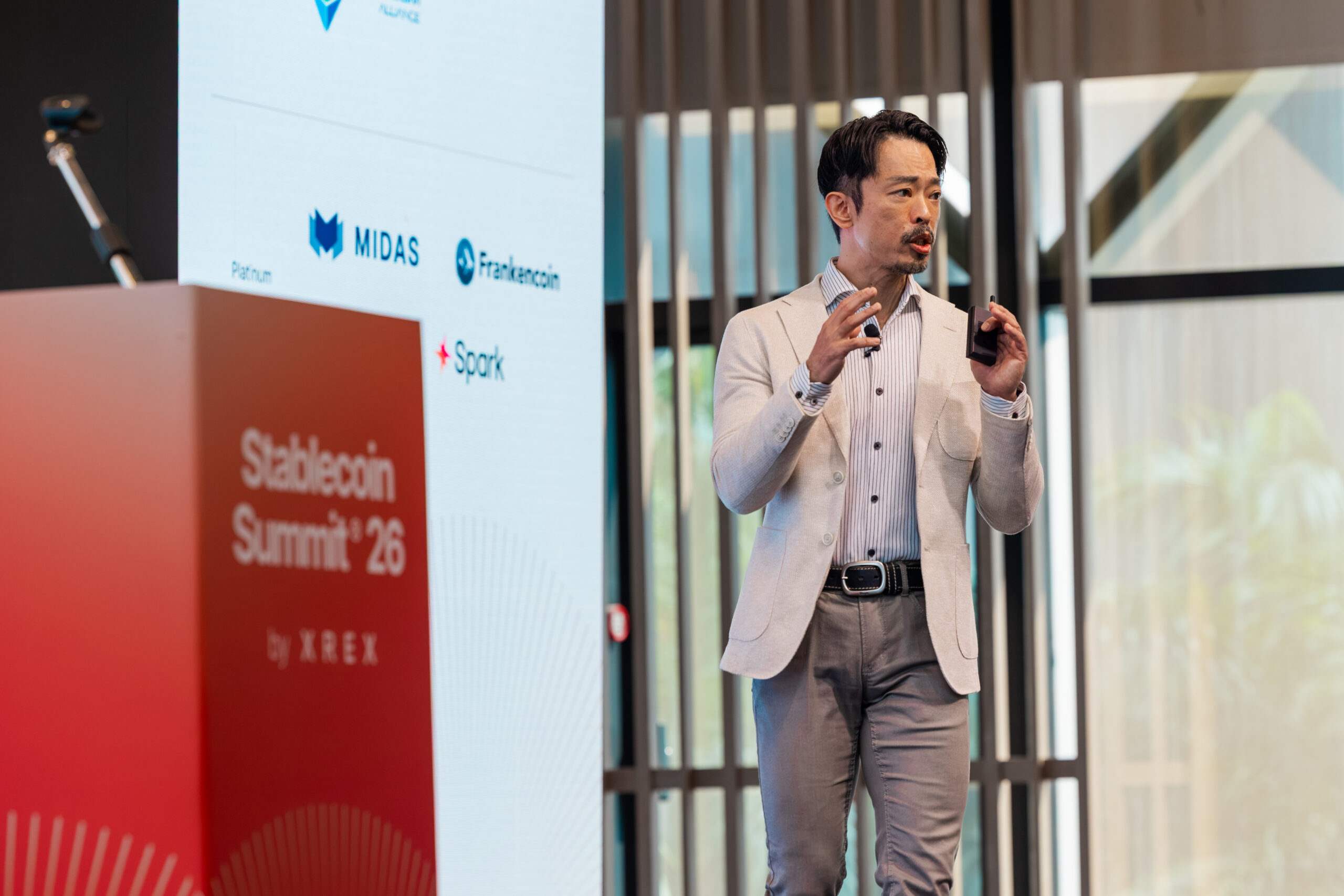
That growth raises a practical question: can stablecoin payments support refunds, tax refunds, financing, and the other services users expect from established payment systems? Moving stablecoins between blockchain wallets doesn’t mean the completion of payment transactions, XREX Co-founder and Group CEO Wayne Huang said in his opening keynote at Stablecoin Summit 2026 in Singapore. He identified two keys to accelerating stablecoin payments’ integration with traditional finance: new stablecoin regulatory frameworks and agentic operational efficiency.
Huang said stablecoin technology has encouraged monetary innovation and competition, giving people the freedom to create and choose their preferred currencies while offering new approaches to financial inclusion. His keynote, “Stablecoin Mass Adoption: The Hard Work Ahead,” examined the work still to be done.
Beyond Value Transfer: What Stablecoin Payments Still Need
Stablecoin adoption has grown rapidly in countries with heavily depreciated local currencies and U.S. dollar shortages. Huang noted that, on open blockchain networks, users can hold and use stablecoins without opening a bank account or completing know-your-customer (KYC) checks. He said that growth demonstrates how “permissionless access accelerates financial inclusion.”
The difficulty arises when users need to convert stablecoins into fiat currency, a process known as off-ramping. Huang drew an analogy to someone arriving at a bank with bags of cash and asking to deposit the money. Stablecoins circulate on open-loop networks, while established banking and payment systems operate as closed loops. Connecting the two inevitably creates friction and bottlenecks.
Although those obstacles may appear to stem entirely from compliance requirements, Huang said established payment systems do far more than move value. He challenged the idea that sending stablecoins from one blockchain wallet to another amounts to a completed payment. “No, that’s moving value, that’s not payment,” he said.
Established fiat payment systems illustrate the difference. Consumers have access to dispute resolution, refunds, chargebacks, fraud protection, credit, and installment plans. Merchants rely on payment acceptance, collections, reconciliation, accounting, and tax filing services, as well as access to financing. Business-to-business (B2B) payments are more complex still. They require mechanisms such as escrow and Letters of Credit (LC) to help ensure contractual obligations are met, alongside tax refunds, reporting, and supply chain finance. An importer, manufacturer, or brand in export business with stablecoins would face a serious problem if it could not obtain tax refunds, Huang said.
Stablecoin payments currently incorporate few of these capabilities. “The world economy runs on finance and credit,” Huang said. Stablecoins are less useful when they remain disconnected from that system, he added. Huang said the financial inclusion agenda remains unfinished. He outlined three priorities: preserving stablecoins’ permissionless and inclusive nature; integrating stablecoin payments into existing payment systems; and recognizing that compliant payment systems need not be entirely closed-loop.

From Education to AI in Healthcare: Why Integration Matters
To explain why integration matters, Huang drew a parallel with education. Although he now acquires most of his knowledge online, formal qualifications and university degrees still matter when applying for work visas abroad. Educational credentials also remain important for people seeking their first job. Singapore, he noted, has therefore invested considerable effort in incorporating online knowledge into its existing education system.
AI in healthcare offers another example. Huang said the technology already provides substantial benefits, but “we cannot operate outside of the existing medical system.” Efforts are therefore underway to integrate AI capabilities into existing healthcare systems.
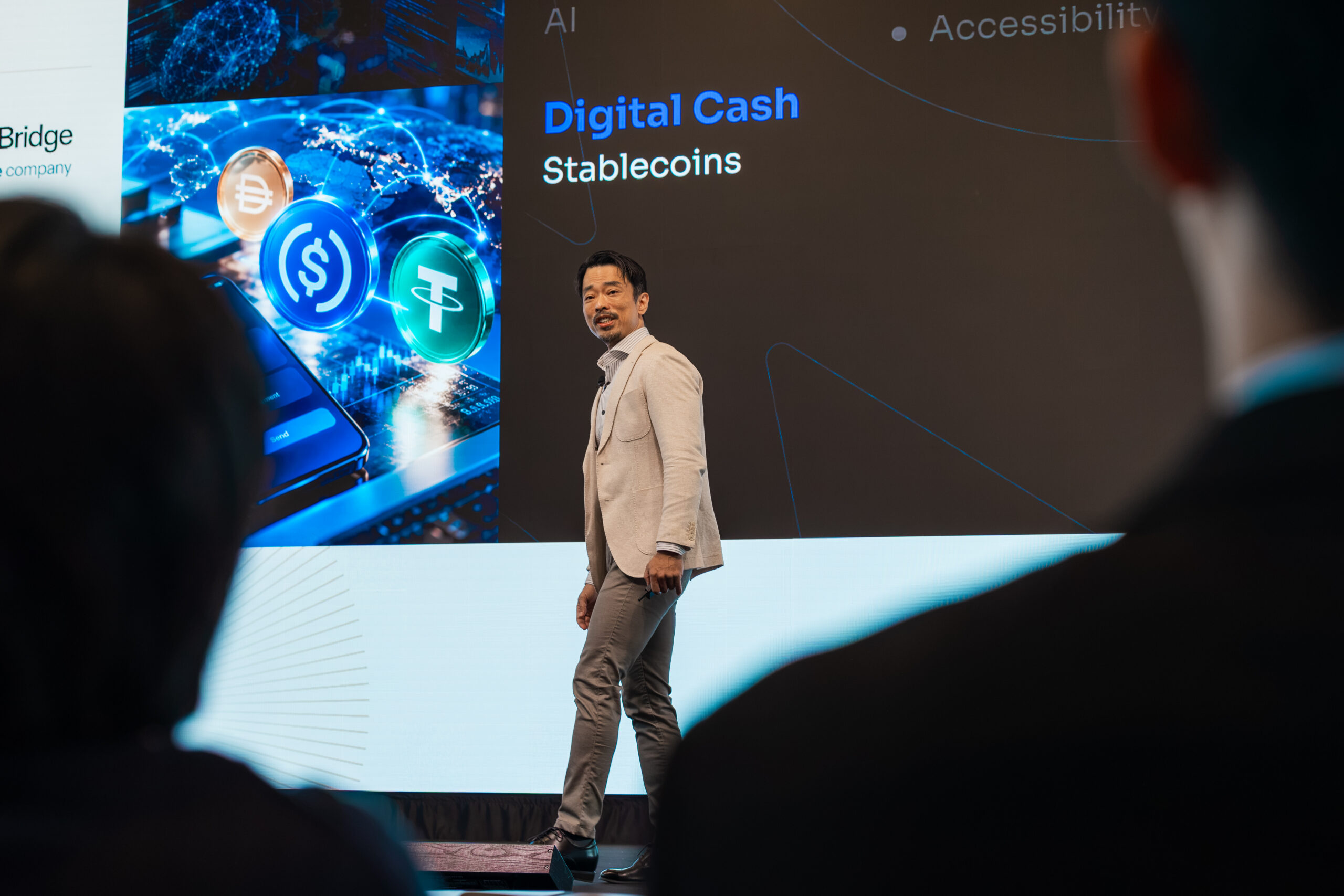
The same principle applies to stablecoins. As digital cash, they cannot stand alone outside the existing financial system, Huang said. He called for strong bridges connecting blockchain networks with that system.
The First Key: New Stablecoin Regulatory Frameworks
Huang pointed to operations of XREX Group’s Singapore entity as an example of how regulation can support this integration. XREX Singapore operates under a Major Payment Institution (MPI) license issued by the Monetary Authority of Singapore (MAS), enabling it to facilitate cross-border B2B payments in both fiat currencies and stablecoins.
Stablecoin regulatory frameworks are taking shape across markets. The U.S. GENIUS Act became law in July 2025, while Taiwan’s Legislative Yuan passed the Virtual Asset Services Act on June 30, 2026. In Singapore, MAS launched a public consultation on September 1, 2026, on proposed amendments to the Payment Services Act to put its stablecoin regulatory framework into law. All these regulatory developments are building a positive environment to grow and connect stablecoins to the existing financial systems.
The Second Key: Scaling Operations with AI Agents
Much of the difficulty in connecting open-loop networks with closed-loop systems lies in operations, Huang said. As payment and financial services usage grows, operational complexity and staffing needs rise with it, increasing operating expenses (OPEX). He described this as the “OPEX scaling nightmare.” Institutions need more compliance analysts, investigators, risk management personnel, and reconciliation accountants as usage grows. Huang said this helps explain why traditional finance remains costly, slow, and often unable to operate around the clock.
Agentic operational efficiency could help address that constraint. “We feel that the operational backbone needs to shift from human-centric workflows to agentic operational models,” Huang said. Under this approach, AI agents equipped with domain-specific knowledge would execute core workflows under human supervision, with cases escalated to people for judgment and approval when needed.
Huang said this requires an AI-native financial service operating system, or FSOS.
Such a system would support AI-assisted KYC, customer due diligence (CDD), anti-money laundering (AML) investigations, suspicious transaction report generation, and exception management. It would retain human oversight and approval through a governed human-in-the-loop architecture and incorporate model risk governance. Every AI-assisted recommendation and action would be traceable to supporting evidence and approval history.
Earning Trust by Doing the Hard Work
Huang concluded that new regulatory frameworks and agentic operational efficiency can accelerate the integration of stablecoin applications with traditional finance. “It’s very hard work, but it needs to be done,” he said.
He cited Ben Horowitz, Co-founder of venture capital firm Andreessen Horowitz (a16z): “Hard things are hard because there are no easy answers or recipes.” He also quoted Amazon Founder Jeff Bezos: “You earn trust slowly over time by doing hard things well.”
Huang closed by identifying four areas of work ahead: permissionless and programmable money, atomic settlement, agentic commerce, and mass adoption at scale. “Let’s get the job done,” he told attendees at Stablecoin Summit 2026.
About XREX Group
XREX Group is a blockchain-enabled financial institution working with banks, regulators, and users to redefine banking together. We provide services to businesses in or dealing with emerging markets, and novice-friendly financial services to individuals worldwide.
Founded in 2018, XREX Group offers a full suite of services such as digital asset custody, wallet, cross-border payment, fiat-crypto conversion, cryptocurrency exchange, and fiat currency on-off ramps.
Sharing the social responsibility of financial inclusion, XREX leverages blockchain technologies to further financial participation, access, and education.
XREX Singapore operates under the Major Payment Institution (MPI) license issued by the Monetary Authority of Singapore (MAS). XREX Taiwan is a regulated VASP that completed its Compliance Declaration on Anti-Money Laundering (AML) with Taiwan’s Financial Supervisory Commission (FSC) in March 2022. It passed its AML registration with the FSC in September 2025, becoming one of ten approved VASPs.