


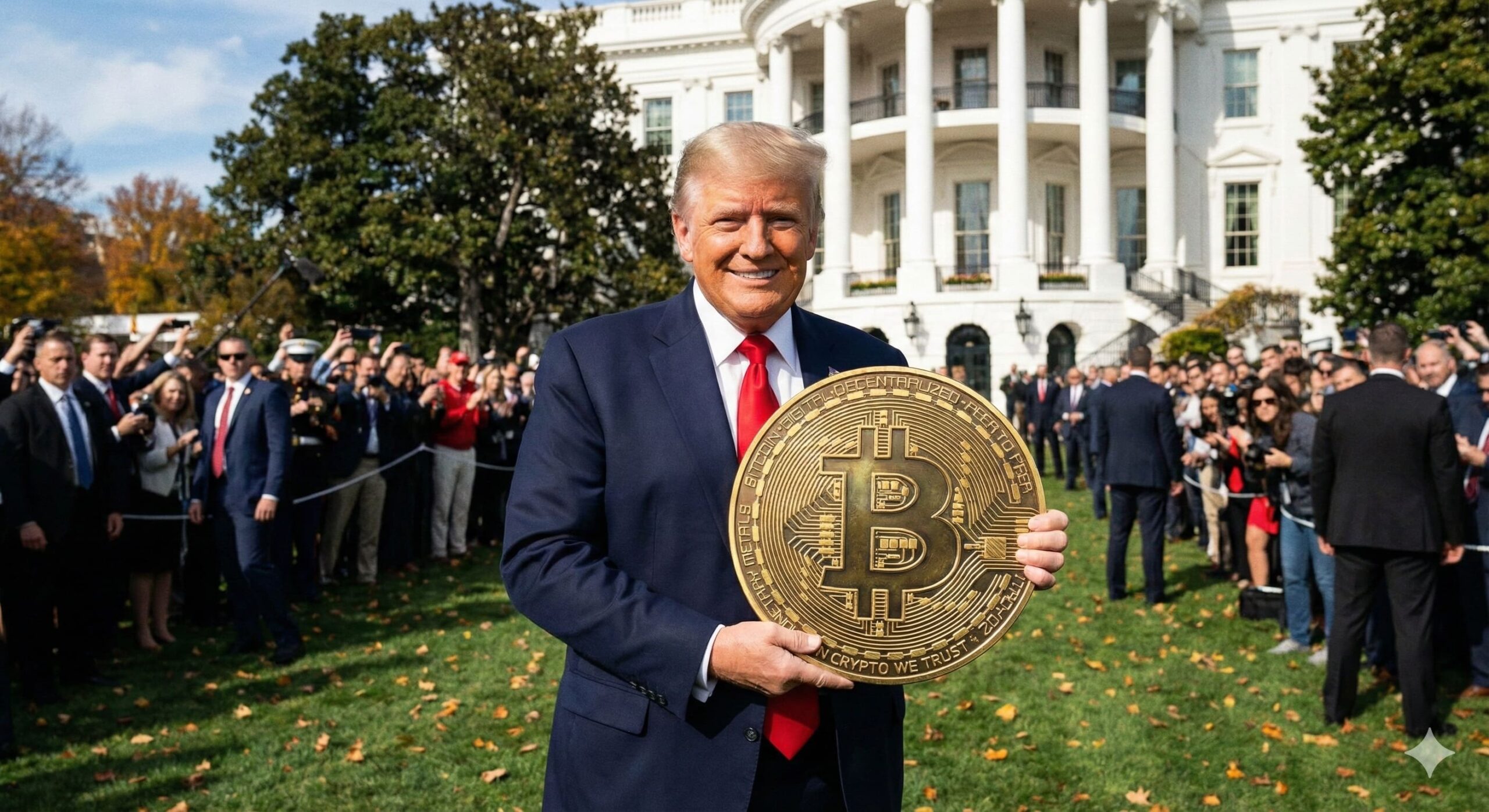
With the successful IPO of stablecoin issuer Circle and the passage of the GENIUS Act in the United States (US)—the first federal law specifically targeting digital assets “stablecoin” has become a defining keyword for global financial markets in 2025 and beyond.
According to a Citi Global Perspectives & Solutions (GPS) report, the total global issuance of stablecoins is projected to reach between $1.9 trillion and $4 trillion by 2030. Stablecoins promise not only greater payment efficiency but also represent a hidden struggle for “financial sovereignty” among nations.
Data from a 2025 report by the Bank for International Settlements (BIS) and the US Treasury indicates that approximately 99% of stablecoins currently on the market are USD-pegged, underscoring the absolute dominance of the US dollar in the digital asset sector.
The passage of the US GENIUS Act has established a foundation for the direction of global stablecoin regulation. In response, nations have begun positioning themselves to issue stablecoins pegged to their own fiat currencies. As the stablecoin war looms, what is the current progress of major economies, such as Europe, Japan, South Korea, and Taiwan? This article provides a comprehensive overview.
📍More to Explore:FinTech and the Rise of the ‘Payment Flow OS’ for Global Supply Chains
United States
In July this year, the US government formally passed the GENIUS Act, establishing the definition, issuance specifications, and regulatory direction for stablecoins in the US and, by extension, the world.
Currently, over 90% of stablecoins on the market are pegged to the US dollar. These are primarily issued by institutions such as Tether, Circle, and PayPal, backed by US dollars or short-term Treasury bills. The market can be subdivided into four main categories:
Category 1: The Stablecoin Hegemons
USDT issued by Tether and USDC issued by Circle are the top two stablecoins by global market share, dominating over 90% of the market. Their status is akin to “cash” in the blockchain world.
USDT: Market Share Leader, King of Liquidity
USDT is widely used for virtual asset trading, payments in emerging markets, and underground remittances. Following the implementation of the EU’s Markets in Crypto-Assets Regulation (MiCA), Tether is required to delist in the European Economic Area (EEA) because it does not have an EU Electronic Money Institution (EMI) license. Even so, its usage rates in emerging markets across Asia, Latin America, and Africa continue to reach new highs.
With the GENIUS Act in effect, Tether announced on September 12 the launch of USAT, a US-compliant dollar stablecoin. It is issued by the federally regulated crypto bank Anchorage Digital to ensure compliance with US law, with reserve assets custodied by financial institution Cantor Fitzgerald to ensure fund security and transparency.
📍More to Explore:Empowering Gig Economy and Global Labor Mobility with Instant Cross-Border Payouts: XREX Pay
USDC: The Compliance Model, A Better SWIFT
USDC is widely used for inter-institutional settlement and cross-border corporate payments. Although its market share trails USDT, its compliance with EU MiCA and US regulations makes it the mainstream stablecoin adopted by banks and public companies. The blockchain-enabled financial institutuin XREX Group CEO Wayne Huang described USDC on the Web3 Go West podcast as “a better SWIFT system” for institutional clearing and settlement.
Category 2: Exchange and Tech Giants (Exchange & TradFi)
These stablecoins are supported by specific platforms or retail tech companies. They typically offer zero fees or special utility within their own ecosystems. Representative coins include:
- PYUSD (Issued by PayPal)
- FDUSD (Issued by First Digital)
- USDD (Issued by TRON DAO)
Category 3: Yield-Bearing
Unlike USDT and USDC, which are set to “pay no interest,” these stablecoins distribute the yield from underlying assets (US Treasuries) to holders. Representative coins include:
- USDe (Issued by Ethena Labs)
- USDY (Issued by Ondo Finance)
- sUSD (Issued by Mountain)
Category 4: Decentralized / Crypto-Backed
These stablecoins do not rely on dollar reserves but are generated through the collateralization of Ethereum (ETH) or other cryptocurrencies. Representative coins include:
- DAI / USDS (Issued by Sky)
- LUSD (Issued by Liquity)
- FRAX (Issued by Frax Finance)
Europe
The European Union’s crypto asset regulation, MiCA, came into full effect in June 2024. Only issuers who have obtained an Electronic Money Institution (EMI) license can list and trade within the EU, making it the stablecoin market with the highest compliance threshold globally.
📍More to Explore:Streamlining Cross-Border Payments for Importers and Exporters: XREX Pay
USDT, the USD stablecoin with the highest market share, was required to delist from the European Economic Area (EEA) because it did not apply for an EU EMI license. This created an opportunity for Euro Stablecoins.
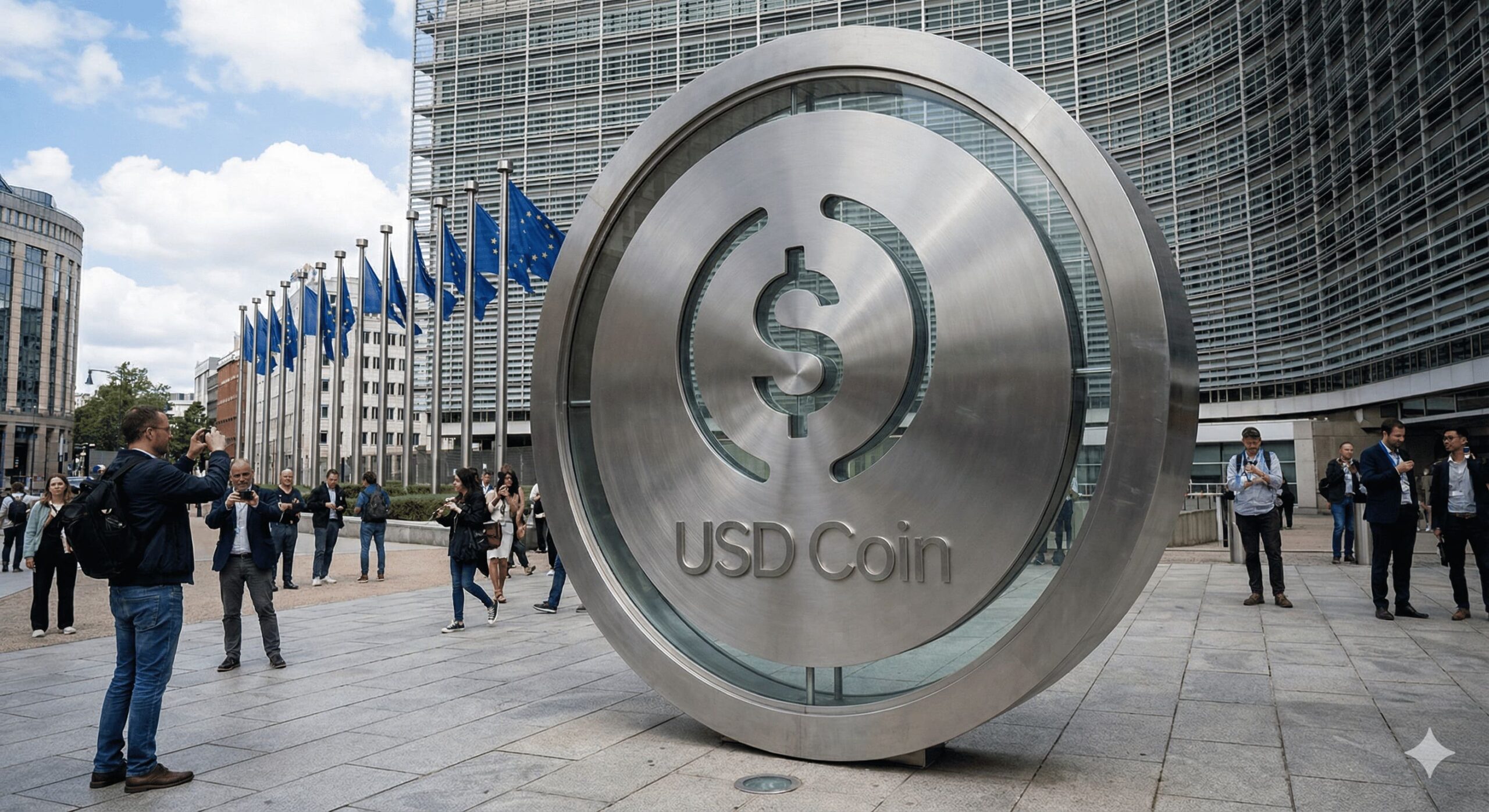
Below are the current dominant Euro stablecoins and their status:
EURC
- Issuer: Circle
- Status: Currently the compliant Euro stablecoin with the highest market share and best liquidity.
- Background: Launched by USDC issuer Circle. Circle was the first global issuer to obtain MiCA certification.
- Features: Interoperable with USDC technical architecture; widely used in DeFi and cross-border payments.
EURCV
- Issuer: Societe Generale
- Status: The world’s first stablecoin issued by a major traditional bank and listed on mainstream exchanges (e.g., Bitstamp, Binance).
- Background: Represents a milestone for “traditional banks” formally entering the crypto sphere.
- Features: Emphasizes extreme compliance and security; primarily targets institutional clients and corporate settlement, but also open to retail purchase.
EURS
- Issuer: Stasis
- Status: A market veteran, but facing significant pressure to transform in the MiCA era.
- Background: A representative of early Euro stablecoins, maintaining a certain market share primarily in the DeFi sector.
Bank Alliance Stablecoin
In addition to the above Euro stablecoins, a consortium of nine major European financial institutions including UniCredit (Italy), ING (Netherlands), DekaBank (Germany), and CaixaBank (Spain) plans to launch a brand new Euro stablecoin in the second half of 2026, accelerating the progress of a digital Euro.
📍More to Explore:Better Liquidity and Faster Settlement for Payment Service Providers (PSPs): XREX Pay
Singapore
Singaporean fintech company StraitsX issued “XSGD”, a stablecoin anchored 1:1 to the Singapore Dollar (SGD), as early as 2020. This stablecoin is regulated by the Monetary Authority of Singapore (MAS) and possesses 100% SGD reserves.
XSGD already has numerous applications and use cases. In November 2025, the issuer StraitsX partnered with Grab he Southeast Asian “Super App” offering ride-hailing, food delivery, and digital finance to embed a stablecoin settlement layer into Grab’s payment network, allowing users to hold and use XSGD for payments.

In the Southeast Asian markets served by Grab, which feature diverse currencies and foreign exchange controls, cross-border payments traditionally took up to two days to settle. With the introduction of stablecoins into the payment network through this partnership, settlement can be completed on the same day.
Notably, XSGD is programmable and can be set to be used at “specific times, specific locations, and for purchasing specific goods” via smart contracts.
Under the Singapore government’s Project Orchid, XSGD is widely used for distributing government subsidies and commercial vouchers. For example, at large scale exhibitions, attendees use PBM tokens backed by XSGD to make purchases at designated merchants.
Singapore Stablecoin XSGD
- Issuance Date: 2020
- Issuer: Singapore fintech company StraitsX (subsidiary of Southeast Asian fintech unicorn Fazz).
- Value: XSGD is pegged 1:1 with the Singapore Dollar.
- Asset Reserves: Composed of cash and Singapore government bonds; 100% fully collateralized. Reserve assets are held in regulated Singaporean banks.
- Regulatory Compliance: StraitsX holds a Major Payment Institution (MPI) license and is regulated by the Monetary Authority of Singapore (MAS).
- Potential Applications:
- Instant global cross-border transfers.
- Participation in Decentralized Finance (DeFi) transactions.
- Payment for goods and services.

Japan
Japanese fintech company JPYC Inc. formally announced in October 2025 the issuance of $JPYC, the “world’s first stablecoin pegged to the Japanese Yen,” alongside the launch of its dedicated issuance platform, “JPYC EX“.
JPYC maintains a 1:1 peg with the Yen, backed by reserves of domestic Japanese deposits and Japanese Government Bonds (JGBs). At a press conference, JPYC Representative Director Noritaka Okabe stated that JPYC aims to reach an issuance scale of 10 trillion yen within three years and become “part of Japan’s social infrastructure”.
Japan’s Financial Services Agency (FSA) amended the Payment Services Act in 2023, establishing a regulatory framework and issuance standards for stablecoins. This allows banks, trust companies, and licensed operators to issue stablecoins, transforming them from “prepaid payment instruments” into regulated “electronic payment instruments”.
Yen Stablecoin JPYC
- Issuance Date: October 2025
- Issuer: Japanese fintech company JPYC Inc.
- Value: JPYC is pegged 1:1 with the Yen; can be issued or redeemed for Yen at any time.
- Asset Reserves: 100% reserve backing provided by Yen deposits and Japanese Government Bonds (JGBs) to ensure stability.
- Regulatory Compliance: JPYC has obtained Japanese regulatory approval and is recognized as a regulated “electronic payment instrument” under the Payment Services Act, rather than the previous classification of “prepaid payment instrument”.
- Potential Applications & Goals:
- Application: Beyond providing stable digital transactions domestically, JPYC may play a significant role in cross-border payments, foreign exchange trading, and the DeFi market, leveraging the Yen’s status as a major international currency.
- Goal: Reach an issuance scale of 10 trillion yen within three years.
Three Major Japanese Banks Unite to Issue Stablecoin
Japan’s current stablecoin market presents a “dual-track system”. In addition to private issuances like JPYC, the FSA announced the launch of the “Payment Innovation Project” (PIP) on November 7, 2025. This approved three major banks—Mitsubishi UFJ, Sumitomo Mitsui, and Mizuho—to jointly issue a Yen stablecoin.
This jointly issued Yen stablecoin targets “corporate capital allocation and inter-bank clearing”. It will utilize Mitsubishi UFJ’s blockchain platform, Progmat, as its technological core, integrating with core banking systems to ensure every Yen stablecoin is backed by corresponding real assets.
Taiwan
In 2023, Taiwan’s Financial Supervisory Commission (FSC) formally became the competent authority for the Virtual Asset Service Provider. This was followed by the establishment of the Taiwan Virtual Asset Service Provider (VASP) Association and the drafting of the VASP Act, symbolizing the formal entry of Taiwan’s virtual currency industry into the “regulatory era”.
The draft VASP Act, submitted by the FSC to the Executive Yuan for review in June this year, includes a chapter dedicated to “Stablecoin Issuance and Management”. It stipulates that in the future, entities obtaining permission from the competent authority may issue fully regulated stablecoins within Taiwan.
Following its third-quarter Board of Directors and Supervisors meeting in September 2025, Taiwan’s Central Bank released a special report and press briefing stating that stablecoin reserve assets must meet two key criteria: high quality and high liquidity. The Central Bank emphasized that because reserves are pegged to the New Taiwan Dollar (NTD), the impact on the domestic payment system, money supply, and monetary policy would be limited.
Wayne Huang, Co-founder and CEO of XREX Group, mentioned on the Web3 Go West podcast that there is an absolute necessity for Taiwan to issue an “NTD Stablecoin”. He argued that failing to participate would result in a lack of voice in the blockchain finance sector and difficulty in aligning with international standards.
Regarding the issuance model, Wayne believes Taiwan will likely pursue a route between the US corporate (institutional) issuance model and a Central Bank Digital Currency (CBDC), with stablecoins issued by traditional financial institutions. The most probable form would be issuance led by a single bank or a banking alliance. Bank issuance would not only leverage existing channels to create application scenarios but also ensure that the issued stablecoins possess the characteristics of broad money.
The FSC revealed to the media in August 2025 that domestic banks are already studying the issuance of NTD stablecoins; however, specific regulations and details will only be confirmed after the VASP Act draft is promulgated and implemented.
The VASP Act draft was submitted to the Executive Yuan on June 27, 2025. It is estimated to pass its third reading by the first half of 2026 at the earliest, with formal implementation not expected until the second half of 2026 or early 2027.
Hong Kong
In Hong Kong, a significant financial hub, currently has no HKD stablecoins approved by the Hong Kong Monetary Authority (HKMA). However, Hong Kong’s Financial Institutions (Stablecoin Issuer Regime) Bill formally took effect in August 2025, requiring issuers to obtain a license from the HKMA.
The ordinance stipulates that stablecoin issuers are prohibited from paying interest to users and must hold 100% reserves in high-quality liquid assets, such as HKD cash or short-term government bonds.
Although formal licenses have not yet been issued, multiple media reports indicate that dozens of operators expressed interest. However, the entities that have genuinely entered the substantive review and testing stage are the following three major players. The first batch of stablecoin licenses is expected to be issued in early 2026.
Standard Chartered Bank Alliance
- Members: Standard Chartered Bank, gaming companies, and Hong Kong Telecom (HKT).
- Features: Bringing stablecoins into mobile wallets and games.
Jingdong Coinlink
- Members: Jingdong Coinlink Technology (Hong Kong) Limited (subsidiary of JD Technology).
- Features: Focusing on supply chain finance and cross-border e-commerce payment scenarios.
RD InnoTech
- Members: RD InnoTech Limited.
- Features: Founded by former HKMA Chief Executive Norman Chan, focusing on solving trade payment pain points.
South Korea
The Financial Services Commission (FSC) of South Korea maintains a conservative stance on stablecoins. The Virtual Asset User Protection Act, which came into effect in 2024, focuses primarily on investor protection and has not yet opened up stablecoin issuance. Currently, there are no “officially compliant,” “widely circulated” Korean Won stablecoins supported 1:1 by fiat currency in the market.
However, as global regulatory trends clarify in 2025, the FSC is actively considering including stablecoin issuance regulations in a “second phase of legislation”. According to a report by South Korea’s News Watch, it is rumored that the FSC is seriously considering allowing non-financial enterprises to issue Won stablecoins.
Although officials have not yet set clear issuance regulations, the private sector has begun experiments. In September this year, South Korean digital asset custodian BDACS announced a partnership with major commercial bank Woori Bank to issue the Won stablecoin $KRW1. Every $KRW1 is fully reserved 1:1 with equivalent Korean Won and custodied in the bank’s trust accounts. However, $KRW1 is currently in the technical verification stage and has not been publicly issued.
Because South Korea lacks formal stablecoin issuance regulations, $KRW1’s “compliance” is built upon the dual framework of the Electronic Financial Transactions Act and the Virtual Asset User Protection Act. Legally, it is classified as an “electronic prepaid payment means” similar to the stored value in services like JKoPay or Line Pay—but operating on blockchain technology.
Won Stablecoin $KRW1
- Issuance Date: September 2025
- Issuer: Digital asset custodian BDACS in partnership with major commercial bank Woori Bank.
- Value: Pegged 1:1 with the Korean Won.
- Asset Reserves: 100% fully collateralized; reserves held in South Korean Tier-1 Banks.
- Regulatory Compliance: As the regulatory framework remains unclear, $KRW1 is in the technical verification phase and not yet publicly issued.
- Potential Applications: To serve as a framework for Won stablecoin issuance, applicable to remittance, payment, investment, and deposit scenarios.
Conclusion
The global “Stablecoin War” of 2026 has officially begun. This is no longer merely an innovation in payment tools, but a critical strategy for “financial sovereignty” among nations. From the US GENIUS Act setting the global regulatory benchmark to the EU’s MiCA building a wall of compliance, major economies worldwide have realized that no country can remain on the sidelines.
In this race toward the next financial battlefield, compliance and application scenarios will be the keys to victory in the stablecoin competition. Whoever controls the narrative of stablecoins will enjoy an advantage in the future global financial order.
🚀 If you are ready to explore stablecoin-based payouts, please contact our Business Development team for support. With MAS licensing in Singapore and investment from leading players like Tether, XREX Pay provides secure, compliant, and enterprise-grade payment infrastructure for businesses. Enable faster, cheaper, and safer gig economy payments—and unlock new opportunities for growth.
About XREX Group
XREX Group is a blockchain-enabled financial institution working with banks, regulators, and users to redefine banking together. We provide services to businesses in or dealing with emerging markets, and novice-friendly financial services to individuals worldwide.
Founded in 2018, XREX offers a full suite of services such as digital asset custody, wallet, cross-border payment, fiat-crypto conversion, cryptocurrency exchange, asset management, and fiat currency on-off ramps.
Sharing the social responsibility of financial inclusion, XREX leverages blockchain technologies to further financial participation, access, and education.
XREX Singapore operates under the Major Payments Institution (MPI) license issued by the Monetary Authority of Singapore (MAS). XREX Taiwan is a regulated VASP that completed its Compliance Declaration on Anti-Money Laundering (AML) with Taiwan’s Financial Supervisory Commission (FSC) in March 2022. It passed its AML registration with the FSC in September 2025, becoming one of nine approved VASPs.